The school report arrived in December. You opened it, scanned for the maths section, and felt your stomach drop. "Working towards expected standard."
Or maybe it's been happening at home. Your child freezes when faced with maths homework. They say "I hate maths" or "I'm just bad at numbers." Tears over times tables. Panic about word problems.
If this sounds familiar, you're far from alone. Research shows that 59/% of UK teachers cite maths anxiety as the top obstacle to learning, and 27% of children finish primary school below target levels in maths.
Here's what you need to know about helping your child with maths in 2026.
Quick Answer for Busy Parents
Does your child need maths support? Watch for: avoiding maths homework, saying they're "rubbish at maths," times tables not sticking, word problems causing panic, or getting "working towards" on their school report.
When to act: Now. January gives 12+ weeks before Easter to build skills and confidence. Gaps don't close by themselves.
What we offer: Small group maths tuition clubs (max 5 children) with UK PGCE-qualified teachers. Weekly online sessions starting 5th January.
This isn't about intelligence. Research from the University of Cambridge found that 77% of children with high maths anxiety are actually normal to high achievers on tests. Their anxiety, not their ability, holds them back.
Maths anxiety passed down. Nearly a quarter (23%) of UK parents feel anxious helping with maths homework. When parents say "I was never good at maths either," children absorb that anxiety.
Teaching methods have changed. The curriculum now emphasises visual models and reasoning alongside arithmetic. Parents often don't recognize the methods schools use.
Specific learning gaps. Missing foundational concepts (like place value or number bonds) creates cascading difficulties. A child who struggles with basic multiplication will find fractions impossible.
Lack of confidence. One poor test result can trigger lasting anxiety. Children then avoid maths, falling further behind.
Signs Your Child Needs Maths Support
Avoidance and anxiety. Your child finds excuses to delay maths homework. They say they're "rubbish at maths." Tears and frustration appear regularly.
Specific struggles. Times tables aren't sticking despite practice. Word problems cause complete confusion. They make the same errors repeatedly. Mental maths is impossible without counting on fingers.
Lost confidence. They assume they'll get it wrong before attempting anything. Self-belief around maths has collapsed.
What Actually Helps
Cambridge research found that simple strategies reduce maths anxiety significantly. Writing about worries before tackling maths helps. Maximising thinking time, avoiding time-pressure, and emphasising reasoning over speed all work.
If your child panics about maths, rebuilding confidence matters more than drilling practice papers.
Focus on understanding, not memorisation. Children need to understand why methods work, not just memorise procedures. Visual models make abstract concepts concrete.
Fill the specific gaps. Generic "more practice" rarely helps. Identify exact weak points (place value, fractions, multiplication) and target those systematically.
Get expert support when needed. Sometimes parent help isn't enough, especially if you're anxious about maths yourself. UK qualified teachers know how to teach tricky concepts and build confidence alongside skills.
Why January Matters
Full spring term ahead. Starting now gives 12+ weeks before Easter to address gaps and build confidence.
Before summer assessments. Whether it's internal testing, SATs preparation, or preparing for the next year group, spring term work makes a real difference.
Momentum and motivation. January brings fresh-start energy. Use that motivation.
Limited spaces available. Our maths tuition clubs have maximum 5 spaces per group. January is when most parents book. Waiting means potentially missing out until the next half-term.
What to Expect from Quality Maths Tuition
Targets specific gaps. Expert tutors identify exactly where understanding breaks down and address those precise points.
Uses visual models. Abstract concepts become understandable through pictures, diagrams, and digital tools.
Reduces anxiety through success. Small wins build confidence. Children realise they can do maths, which transforms their attitude.
Consistent weekly practice. Regular sessions create routine and momentum. Weekly support over months creates lasting improvement.
Common Parent Worries
"Will my child engage online?"
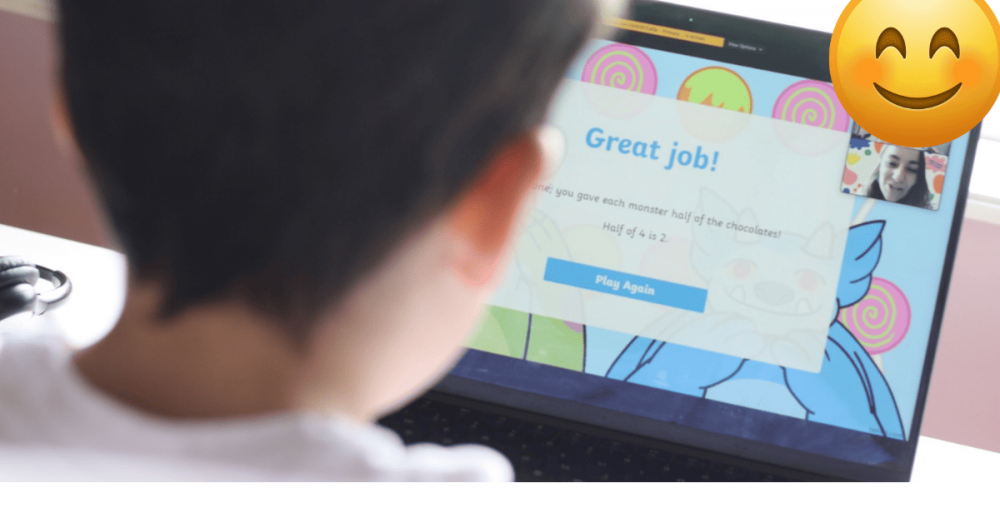
Yes. UK qualified teachers make online maths sessions interactive using digital whiteboards and engaging activities. Small groups (maximum 5 children) ensure everyone participates actively.
"What if they're really far behind?"
That's exactly who benefits most. Groups are matched by ability, so your child learns alongside others at similar levels.
"Is it too late to catch up?"
No. Starting in January with 12+ weeks before Easter provides substantial time for progress. Children can close significant gaps with expert teaching.
"What if it makes them hate maths even more?"
Quality teaching does the opposite. When children start understanding and succeeding, they stop hating maths. Success breeds confidence.
Taking Action in 2026
If your child's December report worried you, or if maths homework has become a battleground, this is your moment to change direction.
Small group maths tuition starting in January gives your child expert teaching from UK qualified primary teachers, targeted support on exactly what they need, and regular practice that builds confidence and skills.
Some clubs start as early as 5th January. Spaces are limited to maximum 5 children per group.
Your child's maths struggles aren't permanent. With the right support and teaching approach, most children can become confident, capable mathematicians.
Let's make 2026 the year your child discovers they actually can do maths.
Author: Callie Moir
I’m Callie, the founder of Primary Tutor Project, an online tuition service that connects families around the world with expert UK primary school teachers. We specialise in English and maths tuition (including ESL), supporting children through every stage of primary education. I've been a tutor and an early years and primary school teacher in Colombia, Japan, and the UK, and I love sharing my experience through the Primary Tutor Project blog!
Loading...
The website uses cookies to provide the best user experience while browsing safely. You can read more about cookies in the Privacy Policy. Cookies Policy