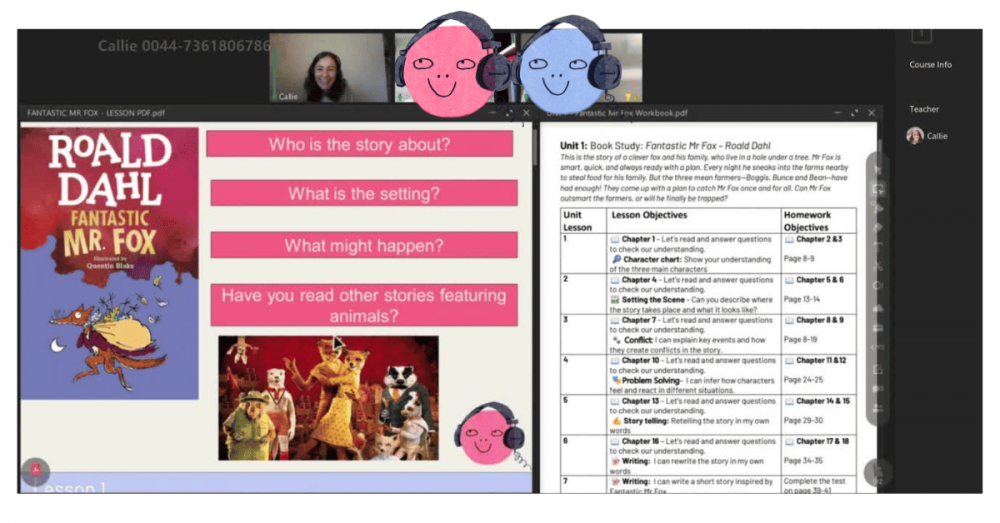
You're weighing your options. Your child needs extra support, but you're not sure whether online tutoring delivers the same results as having someone sit next to them at the kitchen table.
It's a fair question. You want to invest in something that actually works.
Here's what the research shows: online tutoring is just as effective as in-person tuition. In fact, the Education Endowment Foundation found both methods deliver identical results: five months of additional progress on average.
Let's look at the evidence, address your concerns, and help you make the right choice for your child.
What the Research Actually Says
The Education Endowment Foundation analysed decades of research on tutoring effectiveness. Their findings are clear: the delivery method (online vs in-person) makes no difference to academic outcomes. What matters is tutor quality and teaching approach.
A large-scale study in Italy compared online and in-person tutoring for thousands of students. Both groups showed significant improvements in test scores and grades. The online group actually showed slightly higher engagement in some cases, possibly because children felt more comfortable in their home environment.
UK schools increasingly use online tutoring as part of the National Tutoring Programme. The results match face-to-face tutoring across all key metrics: progress, engagement, and confidence.
The verdict? Online tutoring works. The question isn't whether it's effective, but whether it's right for your specific child and situation.
Why Online Tutoring Works Just as Well
Online tutoring succeeds for the same reasons in-person tutoring does: personalised attention, expert teaching, and consistent support.
Quality of interaction matters more than proximity. A skilled tutor online who understands your child's learning style will deliver better results than an average tutor sitting next to them. The screen doesn't diminish the relationship between tutor and student when the teaching is good.
Children adapt quickly to online learning. Primary school children are digital natives. They use tablets at school, watch educational videos, and communicate through screens regularly. Online tutoring feels natural to them, especially with engaging, qualified teachers.
Visual tools enhance learning. Online platforms offer interactive whiteboards, screen sharing, and digital manipulatives that make abstract concepts concrete. Tutors can instantly show examples, display working out, and use visual aids that would be cumbersome in person.
Comfort reduces anxiety. Many children, particularly shy or anxious learners, feel more relaxed at home. They're more willing to ask questions, admit confusion, and take risks with their learning. This psychological safety accelerates progress.
The Real Differences Between Online and In-Person
While outcomes are identical, the experience differs. Understanding these differences helps you choose wisely.
Practical Differences
Time and logistics: Online tutoring eliminates travel. Your child finishes school, has a snack, logs on, learns, and logs off. No rushing, no traffic, no lost evenings. This flexibility benefits busy families juggling multiple children and activities.
Access to tutors: Geography doesn't limit you. Your child in Cornwall can learn from a specialist in Edinburgh. You get access to the best tutor for your child's specific needs, not just whoever lives nearby. If your child needs English as a second language support or specialist SATs preparation, you can find exactly the right expert. This is especially the case for families that move around more than average, like military families who can really benefit from tutoring.
Cost: Online tutoring typically costs 30-40% less than in-person. Tutors don't factor in travel time or expenses. You get the same qualified teachers at £15-35 per hour instead of £30-50+. For detailed cost breakdowns, see our practical guide to tutor costs.
Consistency: Life happens. Children get ill, families travel, schools close unexpectedly. Online tutoring maintains consistency. Your child can have their session from a holiday cottage, from grandma's house, or from bed if slightly unwell. Learning doesn't stop because of logistics.
Learning Experience Differences
Physical materials: In-person tutors can use concrete manipulatives (counters, blocks, fraction bars) directly. Online tutors use virtual versions or ask families to have basic materials ready. For most primary concepts, virtual tools work just as well.
Body language and attention: In-person tutors can see when attention drifts and redirect immediately. Online tutors rely more on verbal cues and asking direct questions. Good online tutors compensate by building more interactive elements into sessions.
Technical requirements: Online tutoring needs reliable internet, a device with webcam, and a quiet space. In-person tutoring just needs a table. Most families already have everything needed, but technical issues occasionally disrupt sessions.
Distraction management: Some children find it harder to focus on screens. Others find the home environment less formal and more comfortable. This varies by child. If your child struggles with concentration or memory, shorter online sessions (30 minutes) often work better than longer ones.
When Online Tutoring Works Best
Online tutoring particularly suits certain situations and children.
Working parents: If both parents work, coordinating in-person tutoring becomes a logistics nightmare. Online tutoring happens at home, removing the transport challenge entirely.
Children who are shy or anxious: Many children feel safer at home. They're more willing to participate, ask questions, and admit when they don't understand. The screen provides a slight buffer that actually helps them engage.
Specific learning needs: If your child needs a specialist (dyslexia support, advanced maths, specific exam preparation), online access gives you far more choice. You're not limited to local tutors.
Consistency is critical: If your family travels, has irregular schedules, or faces frequent disruptions, online tutoring maintains learning momentum when in-person sessions would be cancelled.
Older primary children: Year 4-6 students generally adapt quickly to online learning. They have the focus and digital literacy to engage effectively through screens.
When In-Person Might Be Better
Some situations genuinely suit face-to-face tutoring better.
Very young children: Reception and Year 1 students sometimes struggle with screen-based learning. They benefit from physical presence and hands-on materials. However, many young children thrive online with the right tutor. A trial session reveals what works.
Severe attention difficulties: If your child cannot focus on screens at all, in-person might work better. That said, many children with attention challenges actually benefit from the comfort and familiarity of learning at home, which can reduce anxiety and improve focus.
No suitable space: Online tutoring needs a quiet area with minimal distractions. If your home environment makes this impossible, in-person tutoring at a tutoring centre might suit better.
Parent preference for physical presence: Some parents simply feel more comfortable with face-to-face interaction. That's valid. Your peace of mind matters for consistent follow-through.
Highly kinaesthetic learners: Children who absolutely must touch, move, and manipulate physical objects sometimes engage better in person. However, online tutors can adapt with at-home materials.
How to Know Which Is Right for Your Child
Consider these factors when deciding.
Your child's learning style: Does your child already engage well with screen-based activities? Do they watch educational videos attentively? Can they focus for 30-40 minutes on a task? If yes, online will likely work well.
Your family situation: Do you have time for travel logistics? Do you need flexibility for irregular schedules? Can you maintain consistency with in-person sessions? Be honest about practical constraints.
Your child's personality: Is your child confident speaking up? Do they need physical proximity to trust? Are they shy and might actually benefit from the slight distance screens provide?
Trial sessions matter: Most reputable tutoring services offer trial sessions. Use them. Watch how your child responds. Their engagement tells you everything.
Age and maturity: Younger children (Reception-Year 2) might need shorter online sessions or in-person support. Older children (Year 3-6) typically adapt quickly to online learning.
Making Online Tutoring Work Effectively
If you choose online tutoring, set it up for success.
Create a dedicated learning space: A specific spot with minimal distractions signals "learning time." It doesn't need to be elaborate, just consistent and quiet.
Test technology beforehand: Check internet connection, camera, microphone, and platform access before the first session. Resolve technical issues in advance.
Establish routines: Same time, same place helps children settle into online learning. Consistency builds focus and reduces resistance.
Stay nearby (especially at first): Young children benefit from knowing you're close by. You don't need to hover, but being in earshot helps them feel secure.
Communicate with the tutor: Share what works and what doesn't. Good tutors adapt their approach based on feedback. If your child needs help with reading at home or daily maths practice, tell the tutor so they can reinforce these skills.
Match session length to your child's age and needs: Younger children (Reception-Year 2) often benefit from shorter sessions (30 minutes), while older primary children (Year 3-6) typically engage well in full hour-long sessions. Good tutors structure longer sessions with variety and breaks to maintain focus throughout.
The Bottom Line
Online tutoring is just as effective as in-person tuition. The research proves it. The outcomes are identical when tutors are qualified and teaching is good.
The real question isn't effectiveness. It's practicality, preference, and fit for your child.
Online tutoring offers genuine advantages: flexibility, cost savings, access to specialists, and consistency despite life's disruptions. For most primary school families in the UK, these benefits make online tutoring the practical choice.
But it's not right for everyone. Very young children, those with severe attention challenges, or families without suitable home environments might do better with face-to-face support.
The best approach? Try it. Book a trial session. Watch how your child responds. Their engagement and progress tell you everything you need to know.
At Primary Tutor Project, we've supported hundreds of children through online tuition. Children who were struggling reaching expected standards. Children who dreaded maths discovering they're good at it. Shy children finding their voice.
Online tutoring works. The question is whether it works for your child. And there's only one way to find out.
I’m Callie, the founder of Primary Tutor Project, an online tuition service that connects families around the world with expert UK primary school teachers. We specialise in English and maths tuition (including ESL), supporting children through every stage of primary education. I've been a tutor and an early years and primary school teacher in Colombia, Japan, and the UK, and I love sharing my experience through the Primary Tutor Project blog!
Loading...
The website uses cookies to provide the best user experience while browsing safely. You can read more about cookies in the Privacy Policy. Cookies Policy