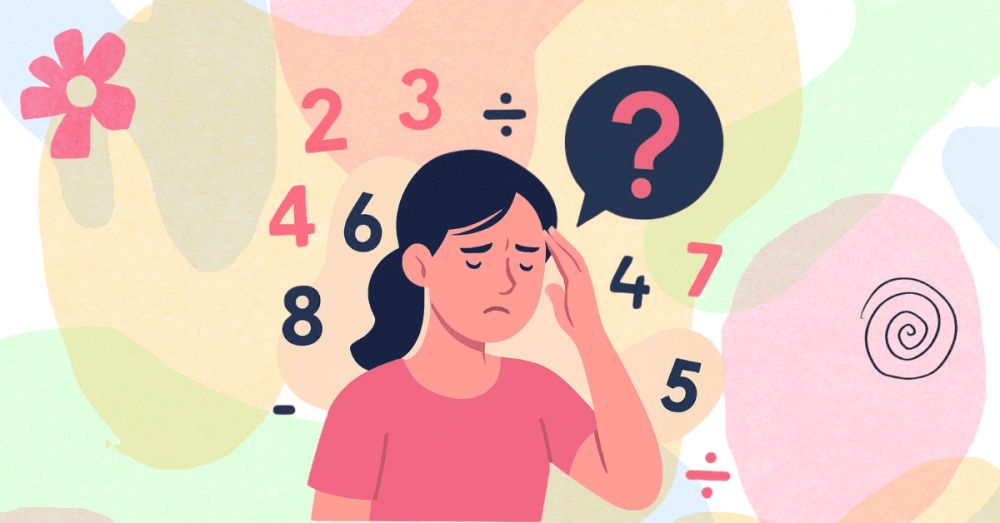
Today at Primary Tutor Project we're recognising Dyscalculia Day (3rd March, or 3/3), chosen because many children with dyscalculia struggle to tell the difference between 3 and 3 when written side by side.
If your child works hard at maths but still can't remember basic facts, struggles to count money, or panics when they see numbers, this might be why.
What is Dyscalculia?
Dyscalculia is a specific learning difficulty that affects understanding and working with numbers. It's not about intelligence. Children with dyscalculia are just as capable as their peers. Their brains simply process numerical information differently.
According to the British Dyslexia Association, dyscalculia is "a specific and persistent difficulty in understanding numbers which can lead to a diverse range of difficulties with mathematics."
Research shows that 3-6% of the population has dyscalculia. That's roughly one or two children in every classroom. Many go undiagnosed for years because they're told they're "just not a maths person" or need to "try harder."
What Makes Dyscalculia Different from Just Finding Maths Hard?
All children find some maths topics difficult. Dyscalculia is different.
Children who find maths hard usually improve with practice and good teaching. Children with dyscalculia have persistent difficulties despite effort, quality teaching, and intelligence.
The core problem is weak "number sense." This means they don't have an intuitive grasp of what numbers mean or represent. Looking at two groups of objects and knowing which has more without counting feels impossible. The number 7 doesn't automatically mean "this much" in their mind.
Struggles to connect the number 5 with five objects
Can't tell which group has more without counting every single item
Avoids games involving numbers
Years 3-6:
Can't remember basic maths facts (number bonds, times tables) despite practice
Counts on fingers for simple calculations in Year 4 or beyond
Struggles to understand place value (what the 3 means in 37)
Gets lost in multi-step problems
Can't estimate answers (thinks 6 x 7 might be 200)
Difficulty with money (counting change, knowing if they have enough)
Struggles to tell time on analogue clocks
Maths anxiety and avoidance
The key indicator: Maths achievement lags significantly behind other subjects. Your child reads well, writes well, but maths feels impossible.
What Dyscalculia Looks Like in Real Life
Your child goes to buy a comic that costs £3. They have a £5 note. They can't work out how much change they'll get, even though they can do 5 minus 3 on paper. Translating real-life into maths feels impossible.
At home, you ask them to set the table for 4 people. They can't picture what "4 forks" looks like as a group. They count them out one by one, unsure if they have the right amount.
In class, they learn their 3 times table on Monday. By Wednesday, it's completely gone. They have to relearn it from scratch. This isn't laziness. Their brain doesn't retain numerical facts the way other children's brains do.
What Causes Dyscalculia?
Dyscalculia is neurological. It's linked to differences in brain areas responsible for number processing, particularly the left parietal sulcus and frontal lobe.
It often runs in families. If you struggled with maths, there's a higher chance your child will too.
What doesn't cause dyscalculia:
Laziness
Not trying hard enough
Poor teaching
Too much screen time
Bad parenting
Dyscalculia Often Comes with Other Difficulties
Dyscalculia rarely appears alone. Many children with dyscalculia also have:
Around 40-50% of children with dyslexia also have dyscalculia. The two often overlap.
How is Dyscalculia Diagnosed?
Dyscalculia is diagnosed by educational psychologists or specialist assessors, not by the NHS. It's an educational difficulty, not a medical condition.
The assessment typically includes:
General ability testing
Working memory assessment
Number sense testing
Mathematical reasoning tasks
Processing speed evaluation
Schools should provide SEN support if dyscalculia is suspected, even before formal diagnosis. This means extra help, different teaching methods, or small group support.
What Helps Children with Dyscalculia?
The good news: with the right support, children with dyscalculia can succeed in maths.
At Primary Tutor Project, our qualified teachers have experience supporting children with dyscalculia and other maths learning difficulties. One-to-one tuition means teaching is completely tailored to your child's specific needs, using concrete resources, visual methods, and systematic approaches that work at their pace.
We don't just teach maths content. We teach strategies that help children understand numbers despite dyscalculia. With individual attention, your child can work through concepts without pressure, ask questions freely, and build confidence through small successes. Every child can succeed in maths with the right support.
The Impact of Undiagnosed Dyscalculia
Research from the UK shows that poor mathematical ability has serious long-term consequences. Children with undiagnosed dyscalculia are more likely to:
Leave school at 16 with few qualifications
Struggle with employment
Develop anxiety and depression
Have difficulty managing money as adults
Early identification and support changes these outcomes. Children who get help early can develop strategies that last a lifetime.
What to Do If You Suspect Dyscalculia
Talk to your child's teacher. Ask for:
Specific examples of where your child struggles
What support is already in place
Whether SEN support or assessment is recommended
Keep records of what you notice at home. Note patterns, not just one-off mistakes.
Get specialist support. Don't wait until they're "further behind." The earlier children get help, the better.
The Bottom Line
Dyscalculia is real, common, and nothing to do with intelligence or effort. If your child's maths struggles feel different from normal difficulty, trust your instinct.
On Dyscalculia Day, the message is simple: children with dyscalculia need understanding, not more pressure. They need teaching that matches how their brain works, not harder worksheets.
With the right support, every child with dyscalculia can develop confidence and competence in maths. They just need someone who understands how to teach them.
Author: Callie Moir
I’m Callie, the founder of Primary Tutor Project, an online tuition service that connects families around the world with expert UK primary school teachers. We specialise in English and maths tuition (including ESL), supporting children through every stage of primary education. I've been a tutor and an early years and primary school teacher in Colombia, Japan, and the UK, and I love sharing my experience through the Primary Tutor Project blog!
Loading...
The website uses cookies to provide the best user experience while browsing safely. You can read more about cookies in the Privacy Policy. Cookies Policy