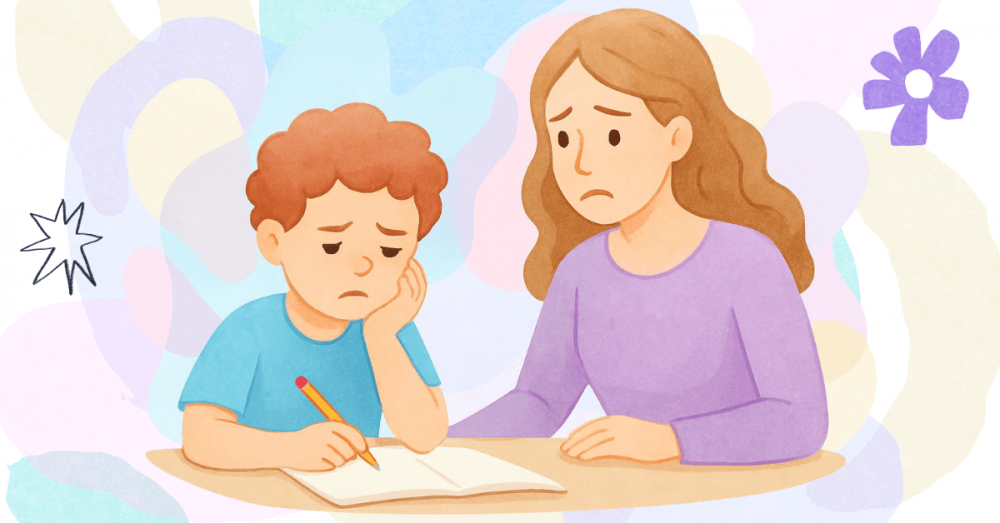
Your child is finding school hard. They're working twice as long on homework as their friends. They're frustrated, you're worried, and the teacher's mentioned "keeping an eye on things."
You're wondering: is this normal struggling, or is it something more?
This is one of the hardest questions parents face, and it's something we hear about at Primary Tutor Project all the time. The line between a child who finds learning tricky and a child with an actual learning difficulty isn't always clear. But there are differences, and knowing them matters.
What Counts as a Learning Difficulty?
A learning difficulty means your child has a significantly greater problem learning than most children their age. It's not about intelligence. Children with learning difficulties are just as capable. Their brains simply process information differently.
The official UK definition states that a child has special educational needs (SEN) if they:
Have a significantly greater difficulty learning than the majority of others the same age, or
Have a disability that prevents or hinders them from using educational facilities normally provided
According to 2025 government data, 19.6% of school pupils in England have identified SEN. That's nearly 1 in 5 children. Of these, 14.2% receive SEN support in school, and 5.3% have an Education, Health and Care Plan (EHCP).
The Most Common Learning Difficulties in Primary School
These are the learning difficulties you're most likely to encounter:
1. Dyslexia (reading and spelling)
Dyslexia affects around 20% of the population. Children struggle to connect letters with sounds, making reading slow and effortful. Spelling is often inconsistent.
2. Dyscalculia (maths)
Dyscalculia affects 3-6% of the population. Children have persistent difficulty understanding numbers, remembering maths facts, and grasping concepts like bigger/smaller or more/less.
3. Dysgraphia (writing)
Difficulty getting thoughts onto paper. Handwriting is often messy, letter formation is hard, and writing is slow and frustrating.
4. Dyspraxia (coordination)
Also called Developmental Coordination Disorder (DCD). Affects movement and coordination, making PE, handwriting, and organisation difficult.
5. ADHD (attention and impulsivity)
Not technically a learning difficulty, but often classified alongside them, ADHD affects concentration, organisation, and impulse control, which impacts learning.
6. Speech and language difficulties
The most common type of need for children with SEN support. Affects understanding language, expressing thoughts, or using speech sounds correctly.
7. Autism Spectrum Disorder (ASD)
The most common type of need for children with an EHCP (33.6% of EHCPs). Affects social communication, sensory processing, and flexibility of thinking.
Is ADHD a Learning Difficulty?
This confuses a lot of parents. ADHD is not a learning difficulty in the same way dyslexia is. It's a neurodevelopmental condition that affects attention, organisation, and impulse control.
However, ADHD makes learning harder. Children with ADHD often struggle with:
Staying focused during lessons
Remembering instructions
Organising work and homework
Sitting still and listening
Completing tasks on time
Around 60% of children with ADHD also meet criteria for written language disorder by age 19. So ADHD doesn't cause a learning difficulty directly, but it makes learning significantly more challenging.
What's the Difference Between Learning Difficulty and Learning Disability?
In the UK, these terms mean different things.
Learning difficulty refers to specific struggles like dyslexia, dyscalculia, or dysgraphia. Intelligence is typical. The child needs different teaching methods or extra support in certain areas.
Learning disability (in UK terminology) means a more severe, generalised cognitive impairment that affects all areas of learning and often daily life skills.
Confusingly, in the US, "learning disability" means what the UK calls "learning difficulty." This causes mix-ups when parents read American resources online.
How Struggling is Different from a Learning Difficulty
All children struggle sometimes. School is hard. New concepts take time. Here's how normal struggling differs from a learning difficulty.
Normal struggling:
Improves with practice and support
Happens in specific topics (fractions are hard, but other maths is fine)
Child keeps up with peers overall
Progress happens, even if slow
Extra practice at home helps
Learning difficulty:
Persists despite practice and good teaching
Affects one whole area (all of maths, all of reading, all of writing)
Child falls further behind peers over time
Progress is much slower than expected for age
Standard teaching methods don't work
If your Year 4 child finds long division confusing, that's normal. If they still can't count in 2s or recognise numbers to 20, that's a learning difficulty.
Early Warning Signs of Learning Difficulties
These signs suggest something more than normal struggling:
1. Persistent difficulty despite good teaching
Your child has had excellent teachers, plenty of support at home, and extra practice. Progress is still minimal.
2. Significant gap between ability and achievement
Your child is bright, articulate, and capable in other areas. But they can't read, write, or do maths at anywhere near the expected level.
3. Family history
Learning difficulties run in families. If you or your partner struggled with reading, maths, or writing, there's a higher chance your child will too.
4. Extreme frustration or avoidance
Your child becomes distressed, refuses to try, or says they're "stupid." This often means the work feels impossible, not just hard.
5. Inconsistent performance
Your child knows their times tables one day and completely forgets them the next. They spell a word correctly in their spelling test but can't use it in their writing. This inconsistency is a red flag.
When Should I Be Worried?
The earlier learning difficulties are identified, the better. But it's hard to know what's "normal" and what requires action.
Speak to your child's teacher if:
Your child is falling behind in Year 2 or beyond (earlier struggles are common)
They're working much harder than peers for poorer results
They avoid reading, writing, or maths completely
Homework causes daily battles and tears
The teacher has mentioned concerns
You suspect a specific difficulty (dyslexia, ADHD, etc.)
The school should put SEN support in place if needed. This means extra help beyond what's normally provided, like small group work, one-to-one support, or different teaching methods.
What Causes Learning Difficulties?
Learning difficulties are neurological. They're caused by differences in how the brain is wired, not by laziness, poor teaching, or lack of trying.
Common contributing factors include:
Genetics (they run in families)
Brain development differences
Premature birth or complications
Sometimes unknown
What doesn't cause learning difficulties:
Bad parenting
Not reading enough at home
Screen time
Too much or too little homework
Your child is not struggling because you did something wrong.
Getting Your Child Assessed
If you suspect a learning difficulty, the first step is talking to school. The SENCO (Special Educational Needs Coordinator) can arrange screening or assessment.
Schools use a "graduated approach":
Universal provision - quality first teaching for all children
SEN Support - additional or different support for children who need it
EHCP assessment - for children who need more support than SEN Support can provide
Formal diagnosis (like dyslexia assessment) is done by:
Educational psychologists
Specialist assessors (for dyslexia)
Paediatricians or psychiatrists (for ADHD, autism)
The NHS doesn't diagnose learning difficulties like dyslexia or dyscalculia because they're educational, not medical. Assessments are done through school or privately.
How Tutors Can Help Children with Learning Difficulties
Here's something important: children with learning difficulties often thrive with the right support. They don't need to struggle forever.
Specialist tuition makes a huge difference because:
Teaching is adapted to how the child learns best
Concepts are broken down into smaller steps
There's time to revisit and consolidate
Confidence builds through success
Gaps are filled systematically
At Primary Tutor Project, our qualified teachers have experience working with children with a range of learning difficulties, including dyslexia, dyscalculia, ADHD, and more. Small group tuition (maximum 5 children) means every child gets individual attention and teaching adapted to their needs.
We don't just teach content. We teach strategies that help children learn despite their difficulties. Multi-sensory teaching, overlearning, concrete resources, and building confidence are all part of how we work.
The Bottom Line
If your child is struggling, trust your instinct. You know your child better than anyone.
Normal struggling improves with practice. Learning difficulties persist despite effort. The gap gets wider, not narrower. Frustration increases. Confidence crashes.
If you're wondering whether it's more than just struggling, it probably is. Get it checked. Early support changes everything.
Your child is not being difficult. They're finding it difficult. And with the right support, they can succeed.
Author: Callie Moir
I’m Callie, the founder of Primary Tutor Project, an online tuition service that connects families around the world with expert UK primary school teachers. We specialise in English and maths tuition (including ESL), supporting children through every stage of primary education. I've been a tutor and an early years and primary school teacher in Colombia, Japan, and the UK, and I love sharing my experience through the Primary Tutor Project blog!
Loading...
The website uses cookies to provide the best user experience while browsing safely. You can read more about cookies in the Privacy Policy. Cookies Policy